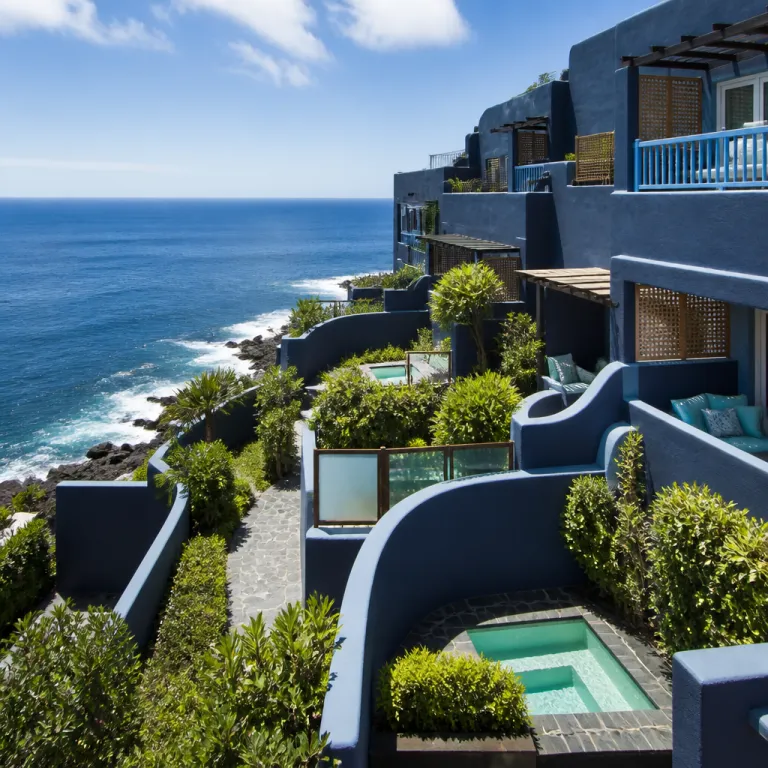
How luxury hotel architecture turns privacy into a structural promise
Romantic stays feel different when the walls, terraces, and paths are drawn for discretion. True intimacy in luxury hotel architecture begins long before a candle is lit or a spa therapist whispers your name. The building either protects your private life or exposes it, and couples feel that within minutes of check in.
Architects talk about orientation and massing, but couples feel it as quiet corners, angled balconies, and rooms and suites that never quite face each other. Literary and cultural historian Danielle Bobker, in her study of 18th century English interiors, notes how closets and cabinets functioned as “intimate spaces” for retreat and reflection. Her work on historical private rooms shows how spatial design has always been a tool for emotional withdrawal, and the best luxury hotels now translate that thinking into contemporary villas, suites, and pavilions.
On a romantic hotels booking page, glossy images of a pool or spa can distract from the real question. You should instead check the site map and floor plans to see how many rooms share a corridor, how many terraces overlook each other, and whether private dining decks are structurally shielded. The most romantic luxury hotels treat privacy as a load bearing element, not an accessory that can be added with curtains and a Do Not Disturb sign.
Look at how a luxury hotel handles thresholds between public and private spaces. The most thoughtful properties use layered entries, with small vestibules or garden paths that slow the transition from lobby to rooms and suites. This kind of romantic architectural planning means you never feel pushed straight from elevator to bed, and the journey itself becomes part of the story hotel you will remember.
For couples traveling with children, this structural privacy matters even more. A family friendly resort can still feel deeply romantic when villas and suites are arranged so that parents have a quiet terrace or an indoor outdoor lounge screened from the main pool. In these luxury hotels, intimacy is not about exclusion; it is about giving each set of guests enough space to relax without overhearing the next family’s bedtime routine.
The village model versus the corridor model for romantic stays
Walk through a long internal corridor and you already know the mood. The classic city hotel layout, with doors marching down a hallway, rarely delivers the kind of architectural seclusion that couples quietly crave. By contrast, the village model scatters villas, cottages, and suites across a hillside, a private island, or a beach, and that separation is where the romance begins.
Aman properties have refined this village logic for decades, and the results are instructive for anyone choosing romantic hotels. At Aman Venice, rooms and suites occupy a historic palace on the Grand Canal, yet clever interior design and staggered circulation routes create a sense of seclusion even in a dense urban fabric. On a private island like Aman Sveti Stefan, stone cottages are structurally isolated by the medieval village layout, turning each unit into a micro retreat where guests can hear waves rather than neighbors.
Caribbean icons such as Jade Mountain and its sister property Anse Chastanet use terraced architecture to similar effect. At Jade Mountain, each sanctuary opens to an infinity pool and a vast view, while thick walls and offset levels prevent sightlines into neighboring suites; in many cases, adjacent sanctuaries are stepped at least one level up or down to avoid direct eye contact. Families who need more space often choose connected villas at Anse Chastanet, yet the spatial planning still ensures that parents can enjoy a private terrace while children sleep inside.
When you compare hotels for a romantic trip, pay attention to circulation rather than just décor. A resort that relies on external walkways, garden paths, and separate pavilions will usually feel more intimate than one where every room sits on the same double loaded corridor. For couples balancing romance and family needs, standalone villas or pavilions often provide the best luxury compromise, a point explored in depth in this guide to the standalone hotel villa as the adult compromise.
Even in urban settings, some luxury hotels borrow the village idea at a smaller scale. Capella Hanoi, for example, uses layered courtyards, intimate staircases, and tucked away rooms and suites to create pockets of quiet in the middle of the city. When you check availability, look for language about wings, courtyards, or clusters of suites; these are clues that the hotel has been planned as a series of small neighborhoods rather than a single anonymous block.
Sightlines, sound, and the invisible architecture of privacy
The most romantic moment in a stay is often not the one on the brochure. It might be the instant you realize that from your terrace, no one can see you reading, talking, or slipping into the pool. That is discreet hotel design at work, and it depends on sightlines more than on any decorative flourish.
When you study photos of luxury hotels, look beyond the infinity pool and the beach cabanas. Notice whether railings are solid or transparent, whether neighboring balconies are staggered, and how far the next building sits from your likely room category. As a rule of thumb drawn from common urban design guidance, a separation of roughly 20 to 30 meters between facing façades, combined with angled balconies, is usually enough to prevent casual glances. A property like Jade Mountain uses bold concrete forms to frame each sanctuary’s view while blocking any cross glance, turning every pool into a private stage for two.
Sound is the other half of invisible architectural design, and materials matter more than many guests realize. Thick stone, dense concrete, and solid timber absorb noise, while large glass panes and thin partitions tend to transmit it, especially when corridors are straight and hard surfaced. In a palace conversion such as Lake Palace or Taj Lake Palace, centuries old stone walls can be an acoustic blessing, but only if modern renovations respect the original mass and avoid carving too many connecting doors.
New build resorts have an advantage because they can plan for acoustic privacy from the start. Designers can separate spa zones from family pools, place late check out rooms away from service elevators, and use landscaping to buffer sound between villas. In technical terms, walls with a sound transmission class (STC) rating above about 55 are generally considered sufficient to block most normal conversation in building acoustics standards, while planted berms and water features can mask residual noise in outdoor areas.
For couples who care about mood, an ambiance audit is as important as a rate check. Before you book, read reviews that mention noise, privacy, and how easy it is to enjoy private dining on a terrace without feeling watched, then pair that with a visual scan of the floor plans. A practical framework for this kind of evaluation appears in our guide to the eight design details that make or break a romantic stay, which helps you translate architecture into lived experience.
Biophilic, indoor outdoor living and the new language of romance
Nature has become the quiet co designer of many romantic hotels. Biophilic thinking, which brings greenery, natural ventilation, and daylight into the heart of a luxury hotel, now shapes how couples move between bedroom, spa, and terrace. When done well, this kind of indoor outdoor architecture softens boundaries without sacrificing seclusion.
In mountain resorts, architects often carve villas and suites into the slope, using green roofs and planted retaining walls to blend structures into the landscape. This not only improves energy performance but also creates a sense that each unit is cradled by the terrain, with only a controlled view line toward the valley or lake. Guests feel cocooned rather than exposed, especially when indoor outdoor lounges are recessed and framed by deep overhangs.
Beach properties face a different challenge, because the very openness that makes a shoreline magical can also erode privacy. Smart luxury hotels respond with staggered pavilions, dune like landscaping, and pools that sit slightly above or below the main paths, so couples can swim without becoming part of the promenade. On some private island retreats, villas are rotated just a few degrees off axis from each other, enough to ensure that no terrace looks directly into another.
Urban hotels are experimenting with biophilic interior design to similar effect. Capella Hanoi, for instance, uses lush internal courtyards and layered planting to create visual buffers between public lounges and guest rooms, turning short walks into small journeys. When you check property photos, look for trees, screens, and pergolas that shield private dining terraces and spa cabanas; these are not just decorative, they are structural tools for intimacy.
Couples planning longer travel can benefit from this new language of romance. Properties that invest in generous balconies, shaded loggias, and semi open bathrooms often feel more livable over five or seven nights, especially when pricing encourages extended stays, as explored in our analysis of how luxury hotels reshape long stay pricing for couples. When architecture supports slow mornings, late check outs, and unhurried afternoons by the pool, romance stops being an event and becomes the default setting.
Heritage palaces, contemporary builds and how to read a floor plan
Not all romance friendly architecture starts from a blank slate. Heritage conversions, from Venetian palazzi to Rajasthani lake palaces, often come with thick walls, generous ceiling heights, and idiosyncratic room shapes that naturally favor privacy. The challenge for a luxury hotel is to weave modern comforts into these bones without flattening their character into generic romantic design.
At Aman Venice, for example, the palace layout dictates a sequence of grand salons, side chambers, and narrow corridors. Rather than forcing a standard hotel grid, designers have allowed rooms and suites to remain slightly irregular, which means fewer shared walls and more corner spaces where guests feel tucked away. In Udaipur, Lake Palace and Taj Lake Palace use courtyards, arcades, and water on all sides to create a sense of remove, even when the property is fully booked.
Contemporary resorts, by contrast, can script every line of sight and every adjacency. Jade Mountain’s dramatic concrete forms, each framing an infinity pool and a three walled sanctuary, show how new builds can hard wire privacy into the very structure. Similar thinking appears in newer mountain and beach resorts, where villas are terraced, rotated, and sometimes even stacked in zigzag patterns to avoid direct overlap.
For travelers, the most practical skill is learning how to read a floor plan before confirming a booking. Look for how many rooms share a corridor, how far the spa sits from the main pool, and whether private dining terraces are clustered or dispersed. If a story hotel publishes a resort map, trace the paths from lobby to suites and from villas to beach; the more options and the fewer choke points, the more likely you are to experience genuine seclusion.
Finally, pay attention to policies that interact with architecture, such as late check out options or quiet zone floors. A luxury hotel that offers flexible departure times, separate family wings, and clearly defined adults only pools is using both design and operations to protect your time together. When architecture, service, and thoughtful planning align, luxury hotels stop performing romance and start enabling it, one well placed wall and one silent corridor at a time.
FAQ
How can I tell if a hotel’s architecture really supports privacy ?
Look for clues in maps, photos, and reviews rather than just marketing language. Properties that emphasize villas, pavilions, or scattered suites usually offer better structural privacy than those built around long internal corridors. Reviews that mention quiet rooms, shielded terraces, and undisturbed private dining are strong indicators that the architecture has been planned for intimacy.
Are heritage palace hotels more romantic than contemporary resorts ?
Heritage palaces often have thick walls, deep corridors, and layered courtyards that naturally support privacy. Contemporary resorts, however, can be designed from scratch with staggered villas, acoustic separation, and carefully controlled sightlines. The most romantic choice depends on whether you prefer historic atmosphere or the precision of new build luxury design.
What should couples traveling with children prioritize in room layout ?
Families should prioritize separation without distance, such as one or two bedroom villas where children sleep in an enclosed room and parents have a private terrace or lounge. Connecting rooms can work if they are at the end of a corridor or in a quieter wing, away from lifts and service areas. Layouts that offer indoor outdoor living give adults a place to talk or read after bedtime without leaving the children unattended.
Does a private pool always mean better privacy ?
A private pool only enhances romance if it is structurally shielded from neighboring terraces and main paths. Check photos to see whether the infinity pool or plunge pool is recessed, walled on the sides, or elevated above eye level. If other rooms, walkways, or restaurants overlook the water, the pool may feel more performative than intimate.
Why do some luxury hotels feel noisy despite high prices ?
Price does not guarantee acoustic privacy, especially in glass heavy or converted buildings where walls and floors were not designed for modern sound insulation. Hotels that prioritize open plan lobbies, hard surfaces, and dense room counts can transmit noise between corridors, rooms, and public spaces. When quiet matters, choose properties that highlight solid construction, separated wings, and thoughtful zoning between family, spa, and adults only areas.