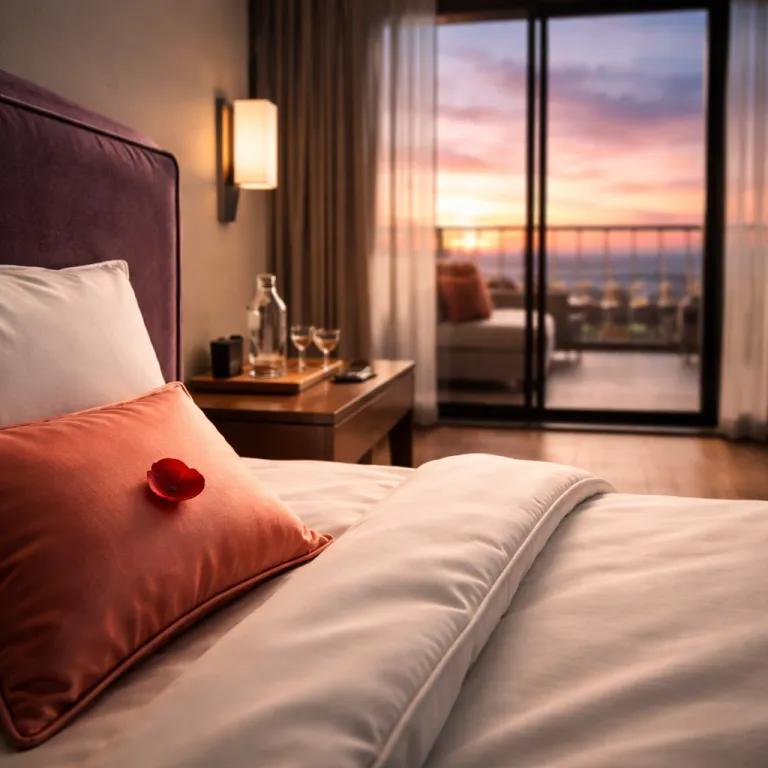
Why the smallest luxury hotel design details matter for romance
The most romantic luxury hotel rarely announces itself with drama. It reveals its interiors in layers, creating an experience that feels intimate, precise, and quietly indulgent. For couples, these hidden elements in guest rooms and shared spaces often matter more than the pool shot on the website.
Architects, interior designers, and lighting specialists now work together to create properties where every room threshold, every corridor, and every lobby corner supports connection. Their shared objective is clear: crafting high-end environments that enhance guest comfort, reflect local culture, and remain eco-friendly without sacrificing sensuality. When you read a property description, train yourself to look beyond the headline amenities and search for the spatial concepts that shape how you will actually feel at midnight.
Global data shows that the luxury hotels segment commands higher average daily rates because guests pay for atmosphere, not only for square metres. STR benchmarking reports, for example, consistently show ADR premiums of around 30–60% for luxury and upper-upscale hotels in major cities compared with midscale competitors.1 The best design-led hotels understand that romance lives in the details, from the weight of the room door to the softness of the ambient soundscape in dining areas. When you choose a modern hotel for a special trip, focus on how its layout, materials, and lighting turn generic real estate into layered, emotionally intelligent spaces.
The eight quiet details that separate a stay from a story
Start with bedside lighting control, because nothing kills a mood faster than one partner crossing the room to switch everything off. In a truly modern luxury hotel room, each guest can create their own pool of light, while circadian lighting subtly guides the body from aperitif to deep sleep. Hospitality lighting guidelines from organisations such as the Illuminating Engineering Society suggest warm colour temperatures of around 2700–3000K in bedrooms to support relaxation.2 When you arrive, test whether the switches are intuitive, whether dimmers work smoothly, and whether reading lights actually illuminate the page instead of your partner’s face.
Next, look at the bathroom–bedroom threshold design, which is where many hotels fail couples. Sliding glass without acoustic privacy, harsh lighting, or a step that catches bare feet can turn sensual ritual into awkward choreography. The most thoughtful interior projects treat this zone as a transition, using warm materials, soft lighting, and clear zoning to create a spa-like experience that still feels intimate.
The ambient soundscape matters just as much as the visual concepts that fill the lobby. A heavy door with a proper seal, good acoustic engineering in corridors, and quiet air conditioning create a cocoon where the outside world disappears. Acoustic consultants often aim for background noise levels around 30–35 dB in luxury bedrooms, roughly equivalent to a quiet library.3 When you check in, pause in the lobby, listen for echoes, then notice how the sound changes as you walk the corridor to your room and close the door behind you.
Window operability and the curtain liner system are two more small but decisive details that rarely appear in marketing photographs. Ideally, you should be able to open a window for fresh air, then darken the room completely when you want to sleep late together. Many premium blackout systems are designed to block 90–99% of external light when correctly specified, with curtain stacks that overlap the frame to prevent glow at the edges. In romantic hotels in lively cities such as the finest romantic hotels in San Antonio for couples, this combination of silence and blackout becomes the difference between a pleasant stay and a transformative one.
Outdoor access proportion is another quiet differentiator. A small terrace with two chairs and a candle can create more romance than a vast but exposed pool deck, especially in dense urban real estate. Properties such as Aman Venice, Six Senses Yao Noi, Nihi Sumba, and The Brando show how generous private outdoor spaces turn a hotel into a temporary home.
Corridor to door distance also shapes how private a room feels. Short, noisy corridors with many doors clustered together often mean more foot traffic, more sound leakage, and less privacy for guests. Longer, better insulated corridors, sometimes slightly curved, signal a design-forward property that understands how to create psychological distance from the public lobby.
The layout of dining areas is a seventh, often overlooked detail. In the most thoughtful hotels, restaurant and bar spaces offer both social tables and tucked-away corners where couples can create their own world. Seating that is slightly shielded from circulation paths, with comfortable spacing of 90–120 cm between tables, allows conversation to stay intimate even in a busy room.
Finally, consider the choreography of arrival as the eighth quiet detail. The path from street to lobby to room can either feel like a public procession or a gentle decompression. A well-planned sequence uses lighting, ceiling height, and subtle wayfinding to slow you down, so by the time you reach the room you have already left the city behind. For couples, that sense of gradual retreat often sets the tone for the entire stay.
Outdoor access, corridors, and the choreography of privacy
Outdoor access proportion is a clumsy phrase, but couples feel its impact instantly. A compact terrace with two chairs and a candle can create more romance than a vast but exposed pool deck, especially in dense urban real estate. Properties such as Aman Venice, Six Senses Yao Noi, Nihi Sumba, and The Brando show how generous private outdoor spaces turn a hotel into a temporary home.
In these luxury hotels, interior design and landscape architecture merge, creating seamless transitions between indoor rooms and outdoor areas. You step from a cool, calm bedroom onto a terrace where the lighting is soft, the furniture is scaled for conversation, and the view feels borrowed just for the two of you. This is modern luxury at its most subtle: not the rose petals, but the balcony where the moonlight makes the conversation unnecessary.
Corridor to door distance is another unphotogenic but crucial metric for a romantic stay. Short, noisy corridors with many doors clustered together often mean more foot traffic, more sound leakage, and less privacy for guests. Longer, better insulated corridors, sometimes slightly curved, signal a property that understands how to create psychological distance from the public lobby.
When you study images of a modern hotel in a dense city such as the luxury romantic hotels in London, look for clues about corridor planning and outdoor access. A room with a small terrace or Juliet balcony, even in compact real estate, can feel more generous than a larger internal room with sealed windows. For couples, that ability to step outside in a robe, feel the air, and share a quiet moment often becomes the most vivid memory of the trip.
How to read photos and test a room in the first 15 minutes
Marketing teams know that photographable luxury sells, so they emphasise pools, statement furniture, and dramatic lobbies. Non-photographable details such as door seals, acoustic panels, and curtain liners rarely appear on Instagram, yet they define the guest experience. When you read a hotel description, ask yourself which elements are there for the camera and which are there for you.
Look closely at gallery images and you will start to see patterns. A wide-angle shot of a lobby might hide how close seating areas are to the main entrance, which affects privacy for couples lingering over a late drink. Bathroom photos that never show the door often signal awkward thresholds or poor separation between sleeping and bathing spaces.
Once you arrive, use the first 15 minutes to test the elements that matter most for romance. Check the curtain liner system for true blackout, open and close the door to feel its weight, and listen for corridor noise with the television off. Try the lighting scenes, run the rainfall shower, and notice whether the bathroom lighting flatters skin tones or feels clinical.
For a quick, practical arrival ritual, couples can use a simple five-step checklist:
- Test blackout curtains and any blind system for light leaks.
- Open and close the door to check the seal and corridor noise.
- Try bedside dimmers, reading lights, and any preset lighting scenes.
- Run the shower and taps to confirm water pressure and temperature control.
- Step onto any balcony or terrace to gauge privacy, views, and ambient sound.
Pay attention to the layout of dining areas and how they relate to the lobby and bar. In the most thoughtful hotels, dining spaces offer both social tables and tucked-away corners where couples can create their own world. If you are planning a quick escape from a major city, guides to elegant weekend getaways from New York can help you shortlist properties where these quiet luxuries are already part of the concept.
From eco friendly sensuality to practical booking strategies for couples
Romantic design is not at odds with sustainability; the best properties prove that eco-friendly choices can heighten sensuality. Natural materials, biophilic interior design, and circadian lighting schemes create spaces that feel both grounding and indulgent. A 2014 study in the journal Environment and Behavior found that exposure to natural elements indoors can significantly reduce stress and improve mood,4 which helps explain why guests pay more for suites with strong biophilic cues.
Behind the scenes, architects, interior designers, lighting specialists, and landscape architects collaborate with contractors, artisans, and consultants to create hotels that meet high-end hospitality demands. Their shared goals are simple to state yet complex to execute: deliver exceptional experiences, stand out in a crowded market, reflect a clear brand identity, embrace innovation, and maintain operational efficiency. As one expert summary puts it, "High-quality amenities, exceptional service, unique design, and premium location."
For couples using a luxury and premium booking website for romantic hotels, the challenge is translating these ideas into practical choices. Start by filtering for a luxury hotel or modern hotel that highlights guest experience rather than only square metres or generic amenities. Then read between the lines of each interior description, looking for mentions of acoustic performance, outdoor access, and thoughtful lighting rather than only spa menus.
When comparing hotels, prioritise properties where the narrative connects architecture, interior design, and landscape into a single story. A design-forward hotel that speaks about how its lobby, dining areas, and rooms work together usually delivers a more coherent romantic experience. Over time, you will learn to sense which luxury hotels treat aesthetics as decoration and which treat them as the quiet architecture of intimacy.
FAQ
What defines a genuinely romantic luxury hotel for couples ?
A genuinely romantic luxury hotel combines thoughtful spatial planning with attentive but discreet service. Look for properties where lighting, sound, and room layout clearly support privacy and connection rather than spectacle. High-quality amenities matter, but the real test is whether the spaces feel designed for two people to slow down together.
Which room features should couples prioritise when booking ?
Prioritise a well-designed room with controllable bedside lighting, strong sound insulation, and some form of outdoor access, even a small balcony. A comfortable bed, rainfall shower, and deep soaking tub with flattering lighting can transform everyday rituals into shared experiences. If possible, choose rooms where the bathroom–bedroom threshold offers both visual and acoustic privacy.
How can I tell from photos whether a hotel will be quiet ?
Photos rarely show corridor to door distance or door seals, but you can still read clues. Look for images that reveal thick walls, recessed doors, and generous spacing between rooms or suites. Reviews that mention silence, sleep quality, and privacy are often more reliable than shots of the lobby or pool.
Do eco friendly hotels compromise on luxury for couples ?
Well-executed eco-friendly design can actually enhance the guest experience for couples. Natural materials, biophilic elements, and energy-efficient lighting often create warmer, more tactile spaces. The key is choosing hotels where sustainability is integrated into the concept rather than added as a marketing layer.
What should we check immediately after entering our room ?
After check-in, test the curtain system, lighting controls, and water pressure before you unpack. Listen for corridor noise with the door closed, and check whether the air conditioning is quiet enough for conversation. If any of these core elements fail, request a room change early while options are still available.
1 STR, "Global Hotel Study" and regional benchmarking reports on average daily rate (ADR) by class, luxury vs. midscale segments.
2 Illuminating Engineering Society (IES), hospitality and hotel bedroom lighting recommendations, typical warm-white ranges around 2700–3000K.
3 Common acoustic design targets for upscale and luxury hotel guestrooms, often specifying background noise levels of approximately 30–35 dB(A).
4 Environment and Behavior, 2014, peer-reviewed research on the psychological benefits of indoor natural elements and biophilic design.